
Improving Surgical Consult Efficiency and Emergency Department Flow
Generating effective consults

The mission of the Duke Institute for Health Innovation (DIHI) is to catalyze transformative innovations in health and healthcare, and to help cultivate a community of innovation and entrepreneurship across Duke University and the health enterprise. Our annual request for innovation applications is open to all faculty, staff, students, and trainees across Duke University and Duke University Health System.
At DIHI, we look for innovative but practical ways in which we can have measurable impact on the health and wellness of our patients and our people. At the same time, we are committed to fostering an ecosystem that is conducive to the creation, development, integration and scaling of novel ideas through transformative partnerships and strong collaboration. In the end, innovation is very much a team science.
We are excited to announce the 2026 Duke Institute for Health Innovation (DIHI) RFA for selecting and implementing innovative solutions in our clinical enterprise. The proposals should provide impactful solutions to significant issues encountered by care providers, patients and their loved ones and represent urgent health challenges nationally.
For the 2026 funding cycle, priority will be given to ideas aligned with the thematic area of harnessing the power of AI to proactively solve critical healthcare challenges, improving operational efficiency and transforming patient care.
This year, we’re hosting Gen AI Innovation Clinics where you can bring your ideas and problems and explore the possibilities of generative AI. You’ll get to collaborate and design solutions and create impactful proposals that align with our focus on AI-enabled healthcare innovation
Proposals are due by 11:59 PM, November 7, 2025.
All proposals are required to have a DUHS operational lead as a co-sponsor to be accepted for review. We look forward to your innovative solutions.
Up to ten applications will be selected for support. Most proposals are expected to request funding in the range of $25,000 to $60,000 over a one-year period. For reference, this funding does not cover faculty time.
Question? Please email DIHIrfa@duke.edu
| DIHI 2026 RFA Timeline | ||
|---|---|---|
| Oct 6, 2025 | DIHI RFA open for submission | |
| Nov 7, 2025 11:59 PM | Application due date | |
| Feb 2026 | Finalists – Presentation to leadership | |
| Apr 2027 | Funding start | |
| Nov 2026 | Midpoint reporting | |
If you have any questions or would like to discuss your innovation with us, please join our RFA office hours Wednesdays at 2:30 – 3:00 PM and Thursdays at 1:30 – 2:30 PM.
The Duke Institute for Health Innovation (DIHI) closed the emerging ideas and innovation funding cycle. Applications were open to address actual, important problems encountered by care providers, patients and their loved ones in our clinical enterprise, and to represent urgent national health challenges.
For the 2025 funding cycle, priority was given to ideas aligned with the thematic area of improving provider and staff experience, patient journey, and clinical outcomes using advanced technology solutions.

Generating effective consults


Our commitment to innovation at Duke Health remains strong, as evidenced by the strong slate of projects brought forward by our clinical teams at the forefront of patient care. The winning teams, selected from a highly competitive pool of applications will have significant impact on automating processes, helping us realize greater efficiencies while bringing the highest-quality care to our patients.

Identifying specialty and clinical urgency for patient appointments.

Addressing food insecurity and other social needs.

Summarizing educational experiences for trainees.


Helping match transplant kidneys.
Identifying and outlining documentation for surgery pre-authorizations.

Assisting prior authorization requests for a prototypical medication.

Our commitment to innovation at Duke Health remains strong, as evidenced by the strong slate of projects brought forward by our clinical teams at the forefront of patient care. The winning teams, selected from a highly competitive pool of applications will have significant impact on automating processes, helping us realize greater efficiencies while bringing the highest-quality care to our patients.

Optimize the process and enhance the efficiency of quality measure reporting to removes unnecessary burden from clinical staff.

Automating follow up to a positive BH screen in 6-11 year old patients within primary care by distributing, collecting and scoring ADHD, Depression and Anxiety questionnaires directly within the EHR.
Develop and validate a machine learning algorithm capable of predicting patient need for spinal surgery or non-operative management utilizing elements from the electronic health record.

Implement a real-time OPAT patient dashboard to facilitate earlier hospital discharge and automate the process of early post-discharge follow-up.

Enable rheumatology providers to identify patients who could be seen by telehealth rather than in-person at their next follow-up appointment.
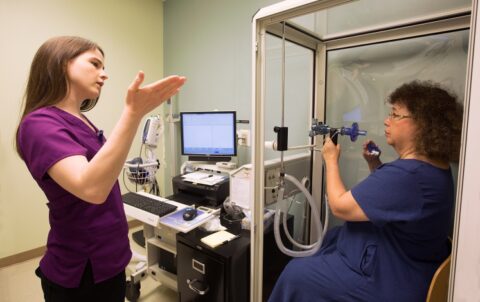
Automating PFT interpretation
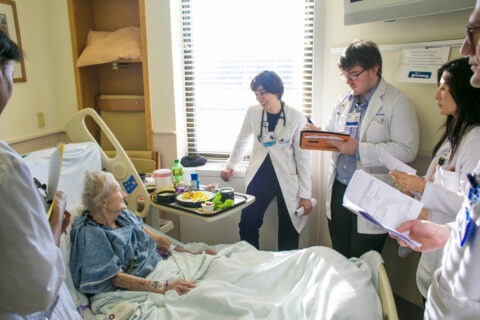
Optimize patient placement and individual team member assignment
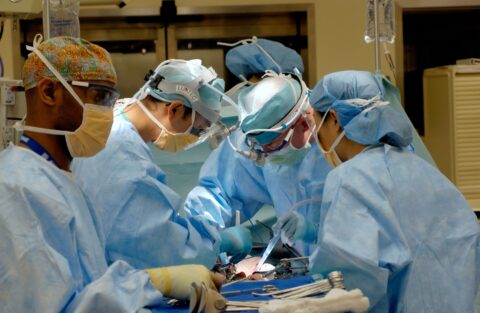
Challenges related to hospital access, staffing constraints, and patient-related factors require a refined risk prediction model to enable risk-mitigation strategies earlier in the process.
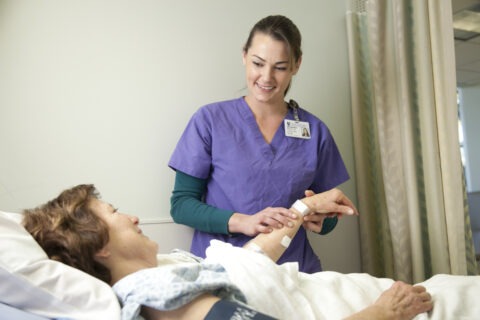
Developing a eProvider to act as a digital liaison for clinical care.

Optimize, implement, and evaluate the PING (Patient Initiated Note about Goals).

Identifying patients at risk of having behavioral emergencies can help to optimize care delivery.

The Prescriptions for Repair project will help us to understand and learn from the experiences of gun violence victims.