
Brief
Survivors of gun violence have long-term healing and community needs after facing the societal challenges of gun violence. Other programs have not focused as much on learning from the experiences of the victims. Prescriptions for Repair (P4R) is a program that supports structured listening sessions using a restorative justice framework for trained community-based facilitators to help survivors of gun violence tell their stories through a non-judgmental narrative process. Our experience has demonstrated that low-cost, trained community facilitators can help build resilient health systems.
The Problem
In recent years, gun violence has increased across the United States (US), particularly in communities of color. In 2022 and Durham alone, over 400 victims of gun violence were treated within the Duke Hospital system, with a large proportion of these victims being young, black men. Across the US, programs have been growing to address the rising epidemic of gun violence, including collaborations between health systems, government agencies, and community groups. Often missing from these programs is attention to the needs and experiences of survivors of gun violence.
Our Solution
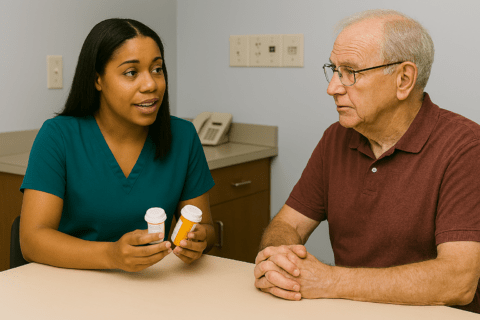
From August 2022 to December 2023, we operated a program called Prescriptions for Repair (P4R). Through a series of structured listening sessions using a restorative justice framework, trained community-based facilitators helped survivors of gun violence tell their stories through a non-judgmental process. In doing so, gunshot survivors defined their “prescription for repair” to continue healing. They also provided a “prescription for repair” for the community to address the harm from gun violence. This program was a collaboration between the City of Durham, Duke Medical School, North Carolina Central University (NCCU), and Restorative Justice Durham.
Over this one-year pilot, we hired a program coordinator, enrolled 30 gunshot survivors or their families, trained 28 community-based facilitators, and conducted 56 listening sessions. We coded all transcripts from 18 consecutive participants, which included 45 listening sessions and ran over 70 hours. We coded over 400 separate statements and summarized these statements within a restorative justice framework. The extended length of our listening sessions and depth of engagement between facilitators and participants far exceeds existing studies to probe into the complexities of the harm resulting from gun violence.
Impact
Some of the major lessons learned from our program are summarized below:
The inherent value of listening to gun violence survivors
One of the most important lessons we learned from P4R is the inherent value of listening to survivors of gun violence using a non-judgmental process. Almost all program participants expressed gratitude for the program, and several respondents were unable to socialize, work, or even leave their homes following the original trauma until participating in P4R. These experiences attest to the high burden of mental and physical sequelae following gun violence.
Although our program facilitators were not practicing therapists, this program attests to the therapeutic nature of a structured listening program for people impacted by gun violence. Social support services for survivors of violent injury across the US remain limited. Most public mental health resources go to treating severe mental illness, while the survivors of violence and their loved ones often lack mental health and social support.
Restorative justice practices date back to early Abrahamic religions, and contemporary restorative justice programs are often aligned with faith-based groups to support programs directed toward gun violence. With most Durham residents identifying religion as important to their lives and a significant portion attending religious services, partnerships incorporating faith-based groups, restorative justice-based programs, government, and academic experts can optimally leverage the shared expertise of all partners.
Race impacts the experiences of gun violence survivors.
Almost all participants in the P4R program commented on the central role of race in their personal experiences of gun violence, how they view community responses (or lack thereof), and the challenges Black communities continue to face in addressing the harm from gun violence. These voices mirror expert opinion, documenting high violent offending rates among Black males in urban contexts. Respondents expressed the importance of structural disadvantages and residential segregation in Black urban communities as drivers of gun violence. Respondents also spoke of the role of gang activities and “street culture” in perpetuating the cycle of gun violence. Finally, respondents voiced both victimization and a sense of inevitability in breaking the cycle of gun violence.
In addition to how race impacts individuals following gun violence, several respondents cited the need for broad healing of the greater Black community. The integration of gun violence into daily life among many respondents reflects what is recognized as “community trauma,” which is characterized by a breakdown of social networks, relationships, and positive social norms across the community. Many P4R respondents cited the importance of historical violence in driving gun violence, such as slavery, economic inequities, and predatory housing practices. Recognizing how views of race are deeply integrated with gun violence within communities can support implementing effective programs to address the community’s harm from gun violence.
The focus should be on children and youth.
When asked to identify community-level strategies to address the harm and reduce the rates of gun violence, many respondents emphasized the need for increased resources for family support and youth development. These responses mirror those of experts who suggest that when strong family units or community organizational infrastructure are lacking, violence and trauma have a more profound impact on individuals and communities.
Other suggestions to improve youth support, as voiced by respondents, also align with prior research, including reclaiming public space to reflect community culture and access to positive family role models and other examples of healthy behaviors and relationships. Participants frequently voiced that improved economic opportunities for young adults are critical to breaking the cycle of gun violence and healing from community trauma. Other suggestions from respondents include expanding resources to increase the number of young people who complete high school, attend college, and job training for non-college-bound youth.
Sustainability requires new thinking among public, private, and community partners.
As P4R is a pilot program, we recognize the need to implement sustainable programs to address the harm of gun violence within existing social and public health networks. We are discussing with local government leaders to develop a government-based Office of Survivor Care (OSC) for gun violence victims, survivors, and their families.
The OSC would represent a transformative community response to gun violence:
- This center would represent a historic opportunity to provide survivor-centric resources to augment existing law enforcement systems.
- The OSC would serve as a community health model that begins with listening to the experiences of those most affected by gun violence to strategically develop programs to address the personal and community harm of gun violence.
- This platform would support partnerships between public, academic, and private groups that have traditionally not worked together to address public health challenges.
For the P4R program, we learned many practical lessons through operating a program with partners from a historically Black university (NCCU), a research university (Duke), the City of Durham, and community partners.