There is an increasing number of patients presenting to ED around the country, leading to prolonged wait times, and, in turn, a higher percentage of patients leaving without being seen (LWBS). Addressing long wait times and high LWBS rates are of particular interest to patients, providers, and hospital administration. For patients, LWBS leads to increased dissatisfaction as well as the potential for a poor outcome due to leaving before receiving care. For providers, there is dissatisfaction related to not being able to care for patients who present to the ED. Lastly, for hospitals, high LWBS rates lead to low patient satisfaction and decreased reimbursement. Addressing this problem requires a mechanism to accommodate the influx of patients that addresses the limited space, staffing constraints, and volume of patients coming to ED.
Our Solution
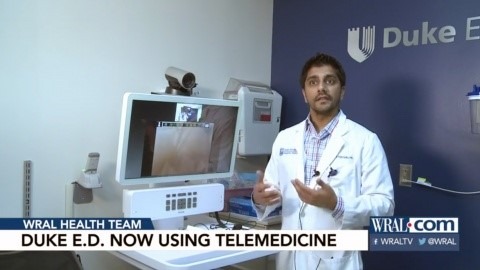
Implementation of a telehealth program at Duke University Hospital ED to allow ED providers to see patients remotely and quickly initiate patients’ care soon after their arrival to the emergency department. Patients were brought to a room with a telehealth cart allowing them to briefly be seen by a provider to initiate their care. For the purposes of the pilot, a specific set of days and times were chosen during which telehealth would be offered — Mondays and Tuesdays from 5-7pm. These dates and times were decided based on historical times of high waiting room volumes.
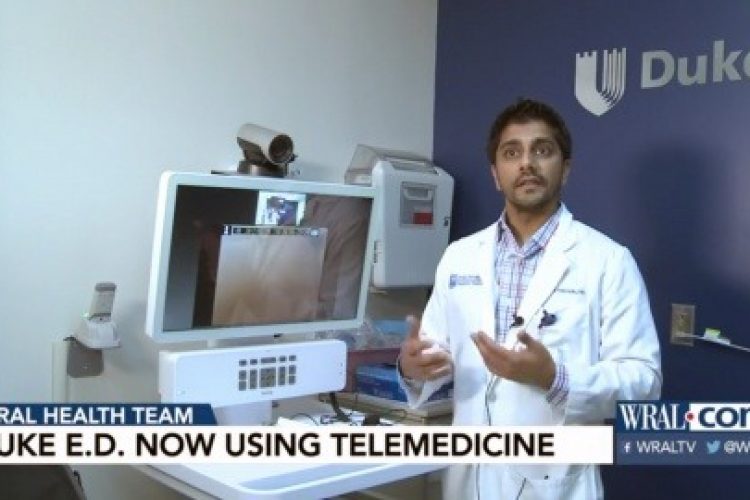
"Duke using telemedicine to cut ER wait times." -- WRAL.com March 15, 2017
Impact
Patient Satisfaction
Follow-up patient phone calls: 30% response rate
Overall impression of Telehealth: 4.7/5
Provider Performance
Average number of
Provider Satisf
Improvement in overall impression of Teleath from inception to completion of pilot.
LWBS rates
Prior to Telehealth (September 2016): 6.85%
Telehealth days (Monday & Tuesday — 10/2016-03/2017): 8.48%
Difficult to quantify impact of Telehealth on LWBS rates due to multiple confounding factors