
When considering a new innovation opportunity and throughout its development, we
focus on three essential components to build a solution. The first, build to show value, focuses on identifying the right problems to solve and bringing together the right people to solve those problems. The second, build to integrate, applies a framework to overcome inertia hurdles and show impact to drive long-term adoption. The third, build to scale, underscores the importance of prioritizing iterative improvements in process, technology, and knowledge sharing to expedite transformative innovation.
With these components in mind, we maintain a “living lab” of innovation implementations across the care continuum. We have implemented numerous solutions in the inpatient setting as well as during and after the transition to outpatient care. Moreover, as we see the shifts in care setting and evolving patient and provider needs, we have detailed experience and prioritize implementation in the healthcare communities we serve. Learn more about this approach by clicking on the Innovation Science and Implementation sub-bullets or a project example.
Featured Projects

Cancer Distress Coach
A randomized control trial to determine whether a distress coach mobile app usage influences symptoms of posttraumatic stress disorder and distress in cancer patients.
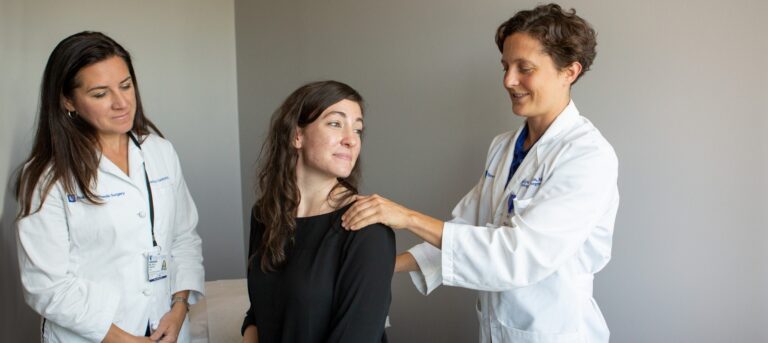
Telehealth examination versus clinical examination in the detection of rotator cuff tears
Simulated telehealth evaluation of shoulder pain using patient self-examination will be compared to traditional clinical examination of shoulder pain using MRI as the gold standard to determine accuracy in detecting rotator cuff tears.

Patient-directed acoustic surveillance for LVAD complications
Patients upload cardiac tones from digital stethoscopes to develop acoustic signatures associated with LVAD complications.
Transforming Cancer Care: Bringing PCPs “Back” into Cancer Care through Onco-Primary Care
Implement a blood pressure management clinical pathway to better incorporate PCPs as active members of the cancer care team.