
9.7.2020 – 9.13.2020 Issue #2
Executive Summary
Pediatric COVID-19 updates from this week include further characterization of racial and ethnic disparities in COVID-19 infection rates, lack of available COVID-19 diagnostic testing for children, and lack of inclusion of children and racial and ethnic minorities in clinical trials of COVID-19 vaccines and therapeutics. Concerns for vaccine approval and rollout after approval continue to abound, as President Trump continues to push for rapid COVID-19 therapeutic, such as convalescent plasma, and vaccine approval before the election, Advance Purchase Agreements (APAs) between high income countries (HICs) and vaccine developers and producers continue to undermine the equitable future distribution of vaccines, and the AstraZeneca Phase 3 trial was put on hold after a participant developed transverse myelitis, a serious inflammatory disorder. A review of multisystem inflammatory syndrome in children (MIS-C) elucidates the current knowledge pool of clinical manifestations, treatment, and outcomes. The D614G SARS-CoV-2 mutant has become the predominate form of the virus around the globe. This mutation has been shown to infect cells more readily in in vitro studies; however, clinical evidence does not suggest that this form is either more transmissible or causes more severe disease. Researchers continue to study the neurological effects of COVID-19 infection, but definitive conclusions concerning mechanisms of infection and disease and clinical severity have not yet been elucidated.
More children are contracting COVID-19. Children have also been identified as playing a larger role in community transmission of the disease than previously thought. Furthermore, children are suffering from severe mental health issues as they face a new array of stressors and learning environments. Schools and pediatric departments struggle with the new unknowns as they balance safety and providing a service to the kids and their families. Perhaps most concerning is the lack of diversity in vaccine-trials, as many do not offer pediatric-related trials. Finally, the pandemic continues to highlight the large disparities that marginalized communities in the United States face.
Table of Contents
Important Statistics/Quotes
- Between February 1 and April 11, 2020, there were 275 COVID-19 interventional clinical trials registered on ClinicalTrials.gov, of which only 30 were open to any patients younger than 18 years.
- Currently, 20% of Americans would outright refuse immunization, while 31% of Americans are uncertain if they would get vaccinated.
- Black Americans, Latinx Americans, and Native Americans were underrepresented in clinical trials of remdesivir, with 20% of 1063 patients being Black Americans, 23% being Latinx Americans, and 0.7% being Native Americans in the placebo-controlled Adaptive COVID-19 Treatment Trial (ACTT-1) funded by the National Institute of Allergy and Infectious Disease (NIAID).
- Parents are in a terrible bind because “they had no choice but to send their kids back to school,” she (Joanna Dolgoff) adds. “Most of them had to go back to work and couldn’t stay home.”
- An analysis of the 2014 National Survey of Drug Use and Health (NSDUH) by found that 13.2% of adolescents received some sort of mental health services from a school setting in the past 12 months, corresponding to 3 million adolescents.
- “While much remains unknown about COVID-19, we do know that the spread among children reflects what is happening in the broader communities,” Dr. Sara Goza said. “A disproportionate number of cases are reported in Black and Hispanic children and in places where there is high poverty.
Headlines from this Week
Review of Multisystem Inflammatory Syndrome in Children (MIS-C) Emphasizes Need for Prompt Recognition and Emergent Medical Attention
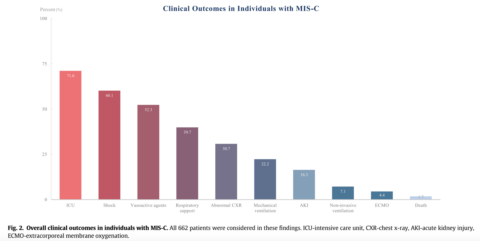
In late April, a serious hyper-inflammatory condition in children temporally following COVID-19 was identified. The condition was named multisystem inflammatory syndrome in children (MIS-C). It presents similarly to Kawasaki disease (KD) and toxic shock syndrome (TSS), but simultaneously has distinct clinical manifestations and characteristics. In a review of 39 studies of MIS-C, 662 patients were identified with a mean age of 9.3 years. MIS-C typically presented 3 to 4 weeks after SARS-CoV-2 infection. All patients presented with fever, while many presented with vomiting, diarrhea, severe abdominal pain, conjunctivitis, and rash. 71% of patient were admitted to intensive care units (ICU), 22.2% required mechanical ventilation, 4.4% required extracorporeal membrane oxygenation (ECMO), 16.3% developed acute kidney injury (AKI), and 1.7% of patients died. Typical anti-inflammatory treatments included intravenous immunoglobulin (IVIG) and corticosteroids. Neutrophilia and lymphocytopenia were common. Abnormal echocardiograms and laboratory cardiac markers were common. African American children are likely at a greater risk for developing MIS-C. Overall, MIS-C is a very serious condition in children who have previously contracted COVID-19 and often requires emergent medical treatment. Further study of the condition is needed to identify clinical and laboratory markers that prognosticate development of MIS-C after SARS-CoV-2 infection.
Studies Indicate More than Half a Million Children in the U.S. Have Had COVID-19. Children are Often Denied Testing and Unable to Participate in Clinical Trials.
JAMA Pediatrics. JAMA Pediatrics #2 (viewpoint). The New York Times.
There are currently few clinical trials of novel and repurposed CCOVID-19 therapies open to enrolling children. Between February 1 and April 11, 2020, there were 275 COVID-19 interventional clinical trials registered on ClinicalTrials.gov, of which only 30 were open to any patients younger than 18 years. Lack of inclusion of children in COVID-19 therapeutics clinical trials could result in ineffective pediatric dosing and potentially unsafe treatments. In the U.S. and the European Union, respectively, the Food and Drug Administration (FDA) and the World Health Organization (WHO) should employ existing legislature pertaining to pediatric pharmaceutical study to promote inclusion of children in clinical trials of therapeutics for COVID-19.
Many COVID-19 testing sites do not provide testing for children, often citing perceived difficulties in test administration. Many families struggle to find sites in which a child that has been exposed or even one that has symptoms can be tested. Currently, there are only 30 interventional clinical trials open to patients younger than 18 years. This lack of adequate testing capacity presents a serious issue for many schools and families.
Legislators in the U.S. and EU have enacted statutory and regulatory changes to address the underrepresentation of children in clinical trials. Still, in the U.S., for example, 15.8% of drugs had any pediatric efficacy, safety or dosing information in their labels at the time of approval and 41.2% of them did not include any pediatric information for up to 6.8 years. Regulators, public health agencies, and governments should ensure that clinical studies of COVID-19 in children are at the forefront of their concerns.
Beyond the Case Count: The Wide-Ranging Disparities of COVID-19 in the United States
Common Wealth Fund. Open Forum Infectious Diseases. Journal of General Internal Medicine.
During the week of May 21-26, 1.3 million workers were out sick because of COVID symptoms in the U.S. Those who were affected were younger and more likely to be people color: 24.2% were Black, 11.7% Asian, and 26.5% Hispanic. Individuals belonging to ethnically/racially minority groups and low income communities experienced higher rates of work absence overall as they were more likely to be affected by COVID-19 diagnoses. Males were also found to be more likely to test positive for COVID-19. These results may be due to the fact that members of marginalized communities work in positions and service industries that are considered essential during the pandemic, placing them at elevated risks of exposure and contraction of COVID-19.
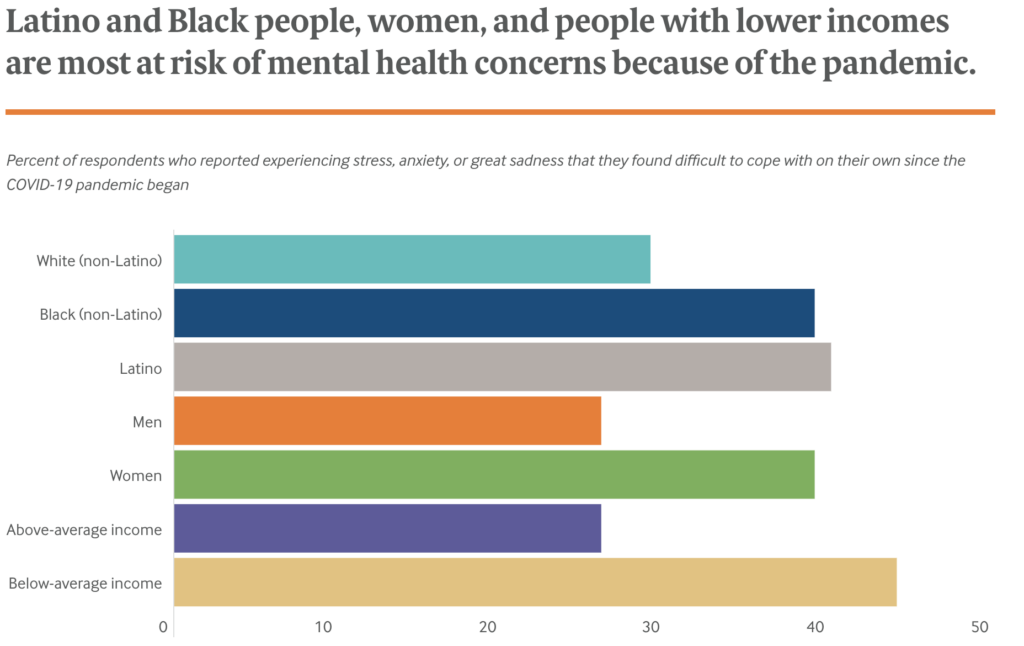
Furthermore, Black and Latino adults and women, specifically, are facing the additional challenge of mental health problems and concerns. Survey data from the U.S. Census Bureau shows that 41% of U.S. adults reported symptoms of anxiety and depressive disorders, compared to 11% in 2019. Looking at the break down, 39% of women reported mental health issues related to COVID-19 which was 13 percentage pointers higher than men. Additionally, individuals in the Black community were 10% more likely to report a mental health challenge than members of the White community.
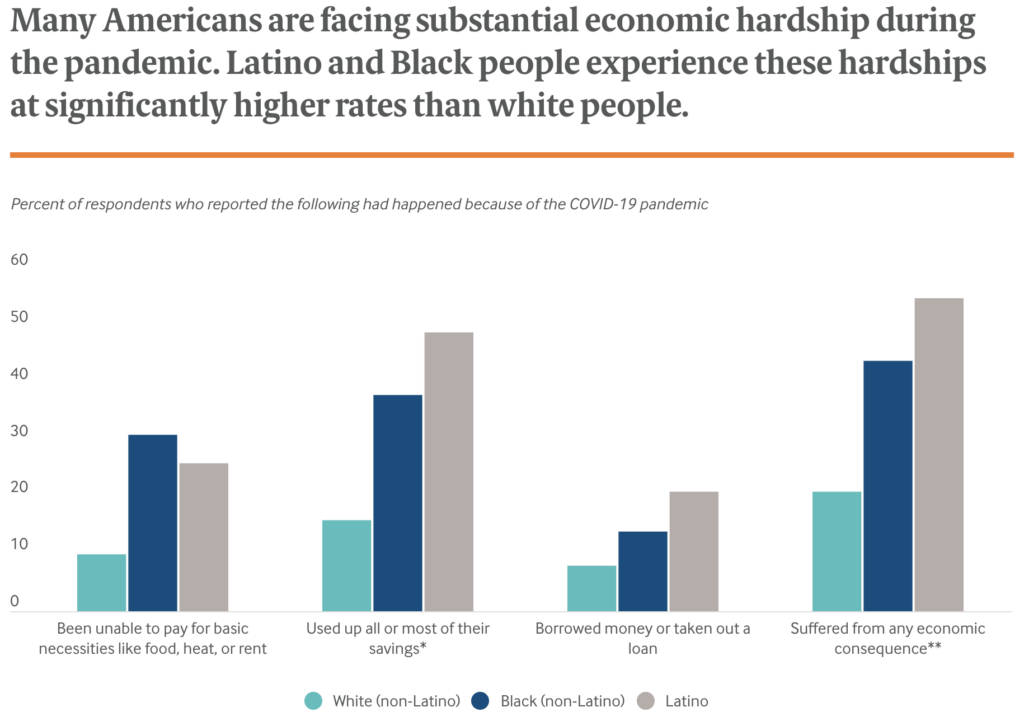
Members of marginalized communities are also more likely to face greater economic hardships and deaths. Contributing to these poorer outcomes is the poverty which many communities of color face. This equates to overcrowded households, air pollution, and inadequate access to healthcare. Further, the COVID-19 pandemic, in particular, has led to a harsh economic recession which has impacted disadvantaged people more than others. The affects are ultimately catastrophic. The U.S. Census Bureau’s coronavirus survey shows that as of July 2020, nearly 7 million more adults are struggling with food insecurity, with large disparities evident between racial and ethnic groups. The inequities continue to expand as more and more marginalized communities are left to fight not only the pandemic but an array of social and economic issues.
Spread of COVID-19 in School Settings
Researchers’ Urgent Message for Schools: Start Planning Now for a Precipitous ‘COVID Slide’ Next Year. The 74.
- Now is the time to plan for how school must be different next year in order to address learning gaps post-COVID-19.
- There are predictions of huge gaps in learning after potentially more than six months of school closures.
- Some students may end up an entire year behind where they would have been academically if COVID-19 had not occurred.
- Students retained only about 70% of this year’s gains in reading, compared to a typical school year, and less than 50% in math.
- Learning losses are likely to be larger in early grades
- Many school districts may want to consider starting the school year earlier, keeping students for longer school days or academic calendars, or increasing the amount of time students are with their teachers.
- Already, increased academic growth has been observed in schools with longer days, lower student-teacher ratios and intensive intervention in learning support.
For pediatricians, COVID-19 presents a thorny problem. Washington Post.
- Many schools find it difficult to uphold social distancing measures due to the lack of space within their buildings. Ultimately, many teachers and school districts feel it is not safe for kids to go back.
- Many parents had no choice but to send their kids back to school due to their jobs.
- Many patients are dealing with food insecurity, job difficulties, distance learning hurdles, loss of family members, missing life events, social isolation and more.
- Children play a much larger role in community transmission than previously thought.
- Many children are experiencing heightened mental health problems, requiring the intervention of pediatric psychologists.
Back to School or Back to Remote Learning? Depends on Where You Live. EdSurge.
- As of Sept. 3, it was found that 356 districts (95%) planned to offer remote instruction, while just 137 planned in-person instruction
- While rural districts typically offer in-person instruction, urban districts in the database gravitated toward virtual learning.
- Over half of urban districts released plans for remote instruction-only.
- Suburban districts fell somewhere in the middle.
Infection Rates Among Children
More than half a million children in the U.S. have had COVID-19. American Academy of Pediatrics. NBC News.
- More than 500,000 children in the U.S. have been diagnosed with COVID-19 and the rate among kids continues to rise.
- The largest increases were reported in Indiana, Kentucky, Missouri, Montana, North Dakota and South Dakota.
- As many as 103 children have died
- Pediatric cases represent 9.8 percent of the more than 6 million cases overall in the U.S.
- Recommended every child over age 6 months receives the flu vaccine before the end of October
Coronavirus Disease 2019 (COVID-19) and Mental Health for Children and Adolescents (view point). JAMA Pediatrics.
- COVID-19 may lead to more mental health cases among children and adolescents due to the effects of the public health crisis, social isolation, and economic recession
- Schools have typically served as mental health system for many children and adolescents
- Adolescents who received any mental health services during 2012 to 2015, 35% received their mental health services exclusively from school settings
- Adolescents with lower family income, in a racially minority group, or with public health insurance were most likely to receive mental health services exclusively from school settings
- Telemental health services have been as effective as in- person services
Characteristics and Outcomes of Children With Coronavirus Disease 2019 (COVID-19) Infection Admitted to US and Canadian Pediatric Intensive Care Units. JAMA Pediatrics.
- Severe COVID-19 cases in children is significant but far less frequent than in adults
- Prehospital co-morbidities are an important factor in pediatric cases of COVID-19
- Of the two children that died in this cohort, both had preexisting co-morbidities and developed multi-system organ failure and one child had gram-negative sepsis prior to developing COVID-19.
- Obesity has been reported in 48% of hospitalized adults with COVID-19
- Overall ICU mortality of less than 5% compared to 50%-62% in adults
Community-Onset SARS-CoV-2 Infection in Young Infants: A Systematic Review (pre-proof). The Journal of Pediatrics.
- Most cases in infants were mild to moderate (fever, respiratory, gastrointestinal, cardiac, and neurologic findings)
- Of confirmed severe or critically ill pediatric patients, one-third occurred in infants less than one year of age.
- Most identified infants appear to have mild to moderate illness and recover quickly with supportive treatment alone.
- Clinicians should have a high index of suspicion for SARS-CoV-2 infection in young infants presenting from the community with systemic symptoms.
- Evaluation for serious bacterial illnesses should continue based on community guidelines, especially among febrile neonates.
- Diagnosis of SARS-CoV-2 infection does not preclude co-infection with other respiratory pathogens.
- Thorough evaluation include PCR testing by a respiratory viral panel in children with respiratory symptoms is suggested.
- Critical illness in this age group is rare and infants appear to recover well with supportive care.
Comparison of Clinical Features of COVID-19 vs Seasonal Influenza A and B in US Children. JAMA Network Open.
- In this cohort, when comparing COVID-19 and influenza cases, there was no significant difference in hospitalization rates, intensive care unit admission rates, and mechanical ventilator use between the two groups.
- Those hospitalized with COVID-19 were older than those hospitalized with seasonal influenza.
- For patients hospitalized with COVID-19, 65% had at least one underlying medical condition, significantly higher than the 42% observed in those hospitalized with influenza.
- Fever was the most often reported symptom at the time of diagnosis followed by a cough.
Transmission Dynamics of COVID-19 Outbreaks Associated with Child Care Facilities — Salt Lake City, Utah, April–July 2020. CDC Morbidity and Mortality Weekly Reports.
- In this study, twelve children acquired COVID-19 in child care facilities.
- Transmission was observed from these children to at least 12 of 46 non-facility contacts.
- One parent was hospitalized.
- Two of three children had confirmed, asymptomatic COVID-19.
- Reports suggest that children aged ≥10 years can efficiently transmit SARS-CoV-2.
- A total of 184 people, including 74 adults and 110 children, had a known link to one of these three facilities with an outbreak.
- Among these persons, 31 confirmed COVID-19 cases occurred.
- 58% cases occurred in adults
- 42% cases occurred in children
Emerging Prevention & Treatment Strategies
Curing COVID-19. The Lancet Infectious Diseases.
- There has been a significant decrease in COVID-19 associated mortality over the course of the pandemic.
- This has been especially evident in countries where cases have increased drastically a second time, including the U.S., Spain, and France.
- The contributions of improved treatment as apposed to other factors is uncertain.
- However, all the credit cannot be placed on improved treatment, as hospital admissions have decreased during resurgences of COVID-19.
- Possible explanations include infection clusters in younger populations, decreased viral load during transmission due to non-pharmaceutical interventions (NPIs) such as mask wearing, and increased testing rates.
- Most COVID-19 therapeutics have not shown definitive benefit.
- Chloroquine and hydroxychloroquine showed no reduction in mortality in randomized control trials (RCTs).
- One review of remdesivir concluded that it may promote a shorter time to clinical improvement and reduced mortality, but a subsequent RCT did not indicate reduced mortality.
- Clinical trials of tocilizumab, an IL-6 receptor antagonist, as well as other immunomodulators, including convalescent plasma are ongoing, with efficacy results pending.
- Dexamethasone showed a significant reduction in mortality in patients both on mechanical ventilation and solely supportive oxygen.
- A RCT of hydrocortisone showed a 93% improvement in the intervention group in days when organ support was not needed.
- These findings led to the WHO to recommend corticosteroid administration for severe and critically ill patients with COVID-19.
Mapping global trends in vaccine confidence and investigating barriers to vaccine uptake: a large-scale retrospective temporal modeling study. The Lancet.
- A study of vaccine confidence across 149 countries between 2015 and 2019 found that being male and fewer years of education strongly associated with decreased vaccine confidence.
- Positive information seeking behaviors and trusting health care workers over other social groups were also associated with increased vaccine uptake.
- Vaccine confidence in Europe was seen to be generally growing.
- In the Philippines and Indonesia, vaccine confidence plummeted between 2015 and 2018, likely due to the rollout of a dengue vaccine to a large number of children that posed a significant risk.
- Japan showed very low vaccine confidence, likely due to the suspension of recommendation of the human papillomavirus (HPV) vaccine by the Japanese Ministry of Health.
- Other countries have additionally experienced variations in vaccine confidence due to anti-vaccination groups and movements, especially on social media, religious and extremist groups, and political instability.
- The authors suggest that this study presents solid baseline vaccine confidence levels and that continued monitoring of trends over the coming months will be important for informing responses to vaccine skepticism and maximizing vaccine uptake once COVID-19 vaccines are approved.
Operation Warp Speed promised to do the impossible. How far has it come? STAT.
- Operation Warp Speed (OWS) has poured in $10 billion into COVID-19 vaccine development, testing, and production, trying to approve and distribute a vaccine at a rapid speed.
- Previously, the fastest a vaccine was developed, tested, and approved was 4 years.
- OWS has not invested as much in therapeutics, with only $450 million going to Regeneron for development of a monoclonal antibody that they hope could be used for both prevention and treatment.
- The diagnostics effort has been led by the National Institutes of Health (NIH) rather than OWS, with a budget of $1.5 billion.
- There have been questions concerning the process of funding certain materials companies for vaccine production over others, with some companies that are rather unproven and others that have significant track records.
- The U.S. has adopted and proliferated a stance of vaccine nationalism, in which the country plans to vaccinate its citizens first, and then move on to help the rest of the world.
- Vaccine distribution in the U.S. will likely be led by McKesson, one of the three largest pharmaceutical wholesalers in the U.S., acting as a central distributor of vaccines, similar to what it does with influenza vaccines.
The coronavirus is mutating – does it matter? Nature.
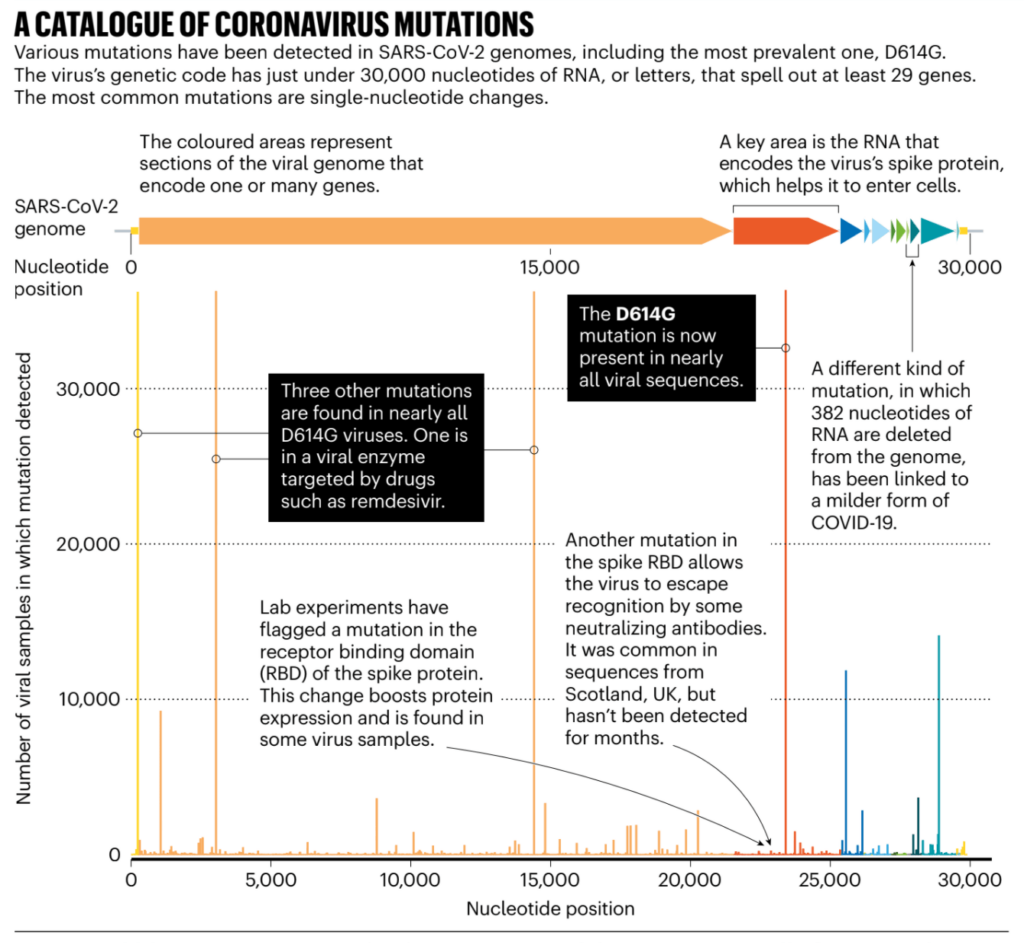
- The D614G mutation, a change of one amino acid in the spike protein from aspartate to glycine, has become the nearly ubiquitous form of SARS-CoV-2 currently.
- In past months, scientists flagged the mutation as potentially concerning, and it has been rigorously studied.
- The D614G mutation promotes a more open conformation of the spike protein, which infect cells more efficaciously in vitro.
- However, researchers have not seen differences between this mutated strain (G) and the previous strain (D) in transmissibility or clinical outcomes.
- SARS-CoV-2 mutates at a slower rate than influenza and HIV.
- Researchers continue to monitor SARS-CoV-2 mutations, especially those in the receptor binding domain (RBD) which could be more likely to allow the virus to evade neutralizing antibodies.
- Mutations of this type exist in the population, but at very low levels, likely due to a current lack of selective pressure in the form of immunity due to past infection or vaccination.
The underdog coronavirus vaccines that the world will need if front runners stumble. Nature.
- There are 302 COVID-19 vaccines in development, according to the Coalition for Epidemic Preparedness Innovation (CEPI) in Oslo.
- Most are still in preclinical development and testing stages, and many are having a hard time finding funding to begin clinical trials.
- After the initial wave of funding for vaccine development and production, catalyzed in the U.S. by the Biomedical Advanced Research and Development Authority (BARDA) as a part of Operation Warp Speed, funding sources have dried up in many areas and many academic centers do not have the capacity or tools to move their vaccine candidates to clinical trials.
- Some developers are focusing on supplying vaccines to lower and middle income countries.
- Overall, smaller scale vaccine development continues, albeit on a slower scale.
- However, these developers are still rooting for better funded vaccine candidates to succeed.
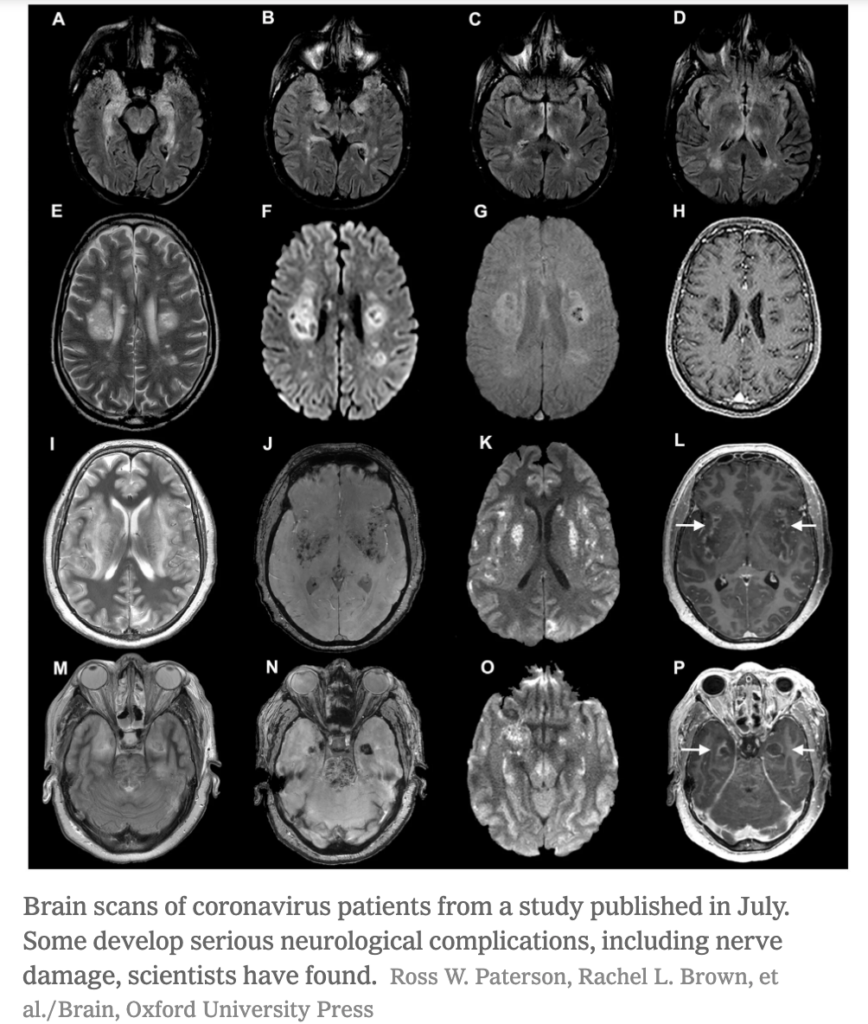
How the Coronavirus Attacks the Brain. NY Times. Brain. BioRxiv.
- Neurological symptoms are common in hospitalized COVID-19 patients.
- Recent studies have shown that SARS-CoV-2 can infect brain cells through examining brain tissues of individuals who have died of COVID-19, mouse models, and in vitro organoids, which are aggregates of brain cells that are made to exhibit a three dimensional structure that is similar to those found in the brain.
- SARS-CoV-2 likely chokes off oxygen to cells adjacent to those that have been infected.
- Additionally, studies have found that the number of synapses declines with neurologic SARS-CoV-2 infection.
- Researchers do not yet know how the virus enters the brain.
- Potential routes include the olfactory bulb, eyes, and crossing of the blood-brain barrier.
- Further clinical evidence is needed to determine the severity of COVID-19 neurological effects.
Convalescent plasma for pediatric patients with SARS‐CoV‐2‐associated acute respiratory distress syndrome. Pediatric Blood and Cancer.
- A report of convalescent plasma (CP) treatment of 4 critically ill children ages 14-18 with COVID-19.
- CP has not been studied extensively in adults, and has not been studied at all in children.
- This report summarizes antibody titers to the receptor binding domain (RBD), total S protein (S), and nucleocapsid (N) of SARS-CoV-2 in both the CP at the time of administration and in the 4 patients longitudinally.
- One patient died, two patients remain admitted with tracheostomies placed, and one patient was discharged.
- All patients were placed on ventilators, two were placed on extracorporeal membrane oxygenation (ECMO), and other treatments, including remdesivir, steroids, tocilizumab, and inotropes, were administered.
- This report does not show whether CP is an effective treatment.
- However, none of these patients experienced adverse side effects or antibody-dependent enhancement (ADE), in which antibodies developed in a previous infection worsened the clinical response in a subsequent infection, both of which are concerns pertaining to CP treatment.
“When Will We Have a Vaccine?” — Understanding Questions and Answers about Covid-19 Vaccination. The New England Journal of Medicine.
- The question “When will we have a COVID-19 vaccine?” is multifaceted and complex, although appearing simple at face value.
- Factors include that multiple vaccines are likely to be approved, the vaccine rollout and immunization prioritization signal that the vaccine will not be available to the entire population at a specific time point, there will be differential availability of the vaccine in different geographic areas, both within and outside the U.S., and vaccine compliance issues may preclude quickly reaching herd immunity levels, resulting in a significant delay in returning to pre-pandemic living conditions.
AstraZeneca Covid-19 vaccine study put on hold due to suspected adverse reaction in participant in the U.K. STAT.
- Astrazeneca and Oxford have paused new participant enrollment and new vaccination in their Phase 3 clinical trial of their vaccine, AZD1222, after a participant developed transverse myelitis.
- It is currently unknown if this was an adverse reaction to the vaccine.
- Researchers are reviewing safety data and have put the trial on hold while this process is carried out.
- The timeline for the clinical hold is unknown, but the company has stated that it is working to expedite the review to minimize any potential impact on the trial timeline.
Methods & Effectiveness of Risk Mitigation & Transmission
Science alone cannot beat the pandemic. We also need outreach about a Covid-19 vaccine. STAT.
- Initial polling data in the U.S. suggests widespread vaccine hesitancy, that, if it continues, will inhibit the full public health benefit of vaccines once FDA approved.
- Of those who have heard vaccine conspiracy theories, 36% believe them to be probably or definitively true.
- Furthermore, currently, 20% of Americans would outright refuse immunization, while 31% of Americans are uncertain if they would get vaccinated.
- Increased outreach and information provision concerning vaccination from health care providers, as well as grassroots public health campaigns, both on social media and via in-person and virtual meetings and gatherings could aid in reducing vaccine hesitancy and skepticism.
Successful Elimination of Covid-19 Transmission in New Zealand. The New England Journal of Medicine.
- By quickly moving from a mitigation strategy to a stringent elimination strategy as COVID-19 cases rose in New Zealand, the country successfully eliminated community-based transmission 103 days after the first identified case.
- Initial strict lockdown protocol, border control policies, and rapid and stringent quarantine and isolation policies are likely the reason for this elimination.
- Life has returned to a relative “normal.”
- Mask wearing was never a significant aspect of the response of New Zealand to the COVID-19 pandemic.
A National Decision Point: Effective Testing and Screening for Covid-19. Duke-Margolis Center for Health Policy. U.S. News.
- The U.S. needs as many as 176 million coronavirus tests each month in order to reopen and operate schools safely, according to a new estimate by the Rockefeller Institute – a far cry from the current testing landscape, which stands at about 21 million tests each month for the entire country.
- The study suggests that this is an achievable goal.
- However, it is likely that this would require additional financial support from the federal government.
Disparities Among Race, Ethnicity, & Geography
Community-Level Factors Associated With Racial And Ethnic Disparities In COVID-19 Rates in Massachusetts. Health Affairs.
- A Massachusetts study of publicly available COVID-19, demographic, occupational, and household data reveals higher rates of COVID-19 in cities and towns with higher percentages of Latinx and Black residents.
- These increases in the Latinx community were largely explained by proportion of foreign-born non-citizens, household size, and proportion of food service workers.
- On the other hand, these predictor variables did not explain well the increases in the Black community, suggesting that other factors contribute to high rates of COVID-19 infection.
- The authors suggest that structural inequities such as disproportionately high incarceration rates, residence in areas with high concentration of multi-unit residential buildings, and neighborhood segregation may contribute.
Legal agreements: barriers and enablers to global equitable COVID-19 vaccine access. The Lancet.
- Many high income countries (HICs) have entered into Advance Purchase Agreements (APAs) with COVID-19 vaccine developers to develop bilateral agreements for procurement of vaccine doses.
- APAs undermine multilateral agreements and initiatives for equitable vaccine distribution such as the COVAX Facility.
- Recently, sentiments of vaccine nationalism have predominated in many HICs, especially the U.S.
- There is need for adoption of internationally agreed upon mechanisms for COVID-19 vaccine procurement and distribution.
- The upcoming World Health Assembly (WHA) and G20 in November, 2020 represent the final opportunities for such discussions to occur and plans to be made.
Racial Disproportionality in Covid Clinical Trials. The New England Journal of Medicine.
- Black Americans, Latinx Americans, and Native Americans were underrepresented in clinical trials of remdesivir, with 20% of 1063 patients being Black Americans, 23% being Latinx Americans, and 0.7% being Native Americans in the placebo-controlled Adaptive COVID-19 Treatment Trial (ACTT-1) funded by the National Institute of Allergy and Infectious Disease (NIAID).
- 11% of the 397 patients in the Gilead-funded study were Black Americans.
- While the National Institutes of Health (NIH) policy and federal law mandate inclusion of minorities in NIH-funded research, inclusion has not been adequate to determine drug efficacy and safety across racial and ethnic minorities.
- Increased recruitment efforts, with elucidation of the benefits and risks of participation in pharmaceutical clinical trials, standardization of reporting of racial and ethnic categories, and increased NIH funding for research carried out by scientists from underrepresented ethnic groups are necessary for illuminating the drug safety and efficacy in minority groups, and working towards overcoming the social and structural causes of health care disparities.
Live Trackers/Important Links
- Where Schools are Reopening in the U.S.
- Johns Hopkins Coronavirus Resource Center
- The Washington Post COVID-19 Vaccine Tracker
- The New York Times COVID-19 Vaccine Tracker
- The Washington Post Global COVID-19 Spread Tracker
- The New York Times North Carolina COVID-19 Spread Tracker
- Duke COVID-19 Testing Tracker
- University of North Carolina at Chapel Hill COVID-19 Tracker
- The New York Times State Reopening and Closing Tracker